
Bechara Samneh
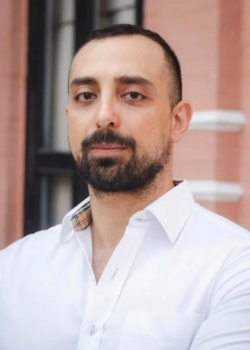
Doctoral Researcher Bechara Samneh
Institute for Development Policy and Development Research (IEE)
Bechara Samneh is a doctoral researcher in International Development Studies at the Institute for Development Policy and Development Research (IEE), Ruhr University Bochum. He served as the Director of MOSAIC, a leading LGBTIQ+ organization in the SWANA region, where he has led the design and implementation of innovative and first-of-their-kind programs focused on protection, service delivery, and community empowerment. His work has contributed to advancing inclusive humanitarian responses in contexts where LGBTIQ+ issues remain highly under-researched and underserved, in addition to leading on the delivery of emergency responses across the region in countries such as Lebanon, Syria, and Afghanistan. He also serves as the West Asia Board Representative at ILGA Asia, supporting regional advocacy and coordination efforts. His professional and research interests focus on humanitarian governance, displacement, and social inclusion.
- Humanitarian Governance
- LGBTIQ+ Inclusion
- Refugees and Displacement
- Intersectionality
- Queer Studies
- Protection Systems
- Migration and Development
- Middle East
This research examines how humanitarian aid systems in Lebanon and Syria include or exclude LGBTIQ+ persons through everyday practices of aid delivery. It critically explores how vulnerability is not only experienced but also produced through institutional decisions, including targeting mechanisms, funding priorities, partnership models, and risk management strategies. Drawing on intersectionality, queer humanitarian scholarship, and critical humanitarian studies, the project analyzes how sexuality and gender become governed within humanitarian responses, and how certain identities and needs are rendered visible, invisible, or conditional. Using a comparative mixed-methods approach combining document analysis, surveys, and interviews, the research connects institutional frameworks to lived experiences of access, exclusion, and resilience. By situating humanitarian practice within broader political and anti-gender dynamics, the study aims to contribute to more inclusive and accountable approaches to protection in protracted crisis settings.
- Diab, J. L., & Samneh, B. (2024). On the margins of refuge: Queer Syrian refugees and the politics of belonging and mobility in post-2019 Lebanon. International Journal of Discrimination and the Law. https://doi.org/10.1177/13582291241263802
- Diab, J. L., & Samneh, B. (2025). Fighting to be Felt: Queer Necropolitics and Self-Defense as Resistance for Trans-Syrian refugee sex workers in Lebanon. Journal of Homosexuality, 73(8), 1998–2019. https://doi.org/10.1080/00918369.2025.2537833
- Diab, J. L., Samneh, B., Masoud, D., & Cravero, K. (2024). Gender identity as a barrier to accessing adequate and inclusive healthcare for Syrian refugees in Lebanon’s Northern regions. Frontiers in Human Dynamics, 5. https://doi.org/10.3389/fhumd.2023.1205786
- Diab, J. L., Samneh, B., Spencer, A., Afandi, A., & Daigle, M. (2025). Unmasking the systemic inequalities undermining refugee sexual and reproductive health and rights, intimacy, and access in Lebanon. Disasters, 49(4), e70013. https://doi.org/10.1111/disa.70013