Prof. Dr. Dijkzeul's Research Project in Cameroon and Nigeria
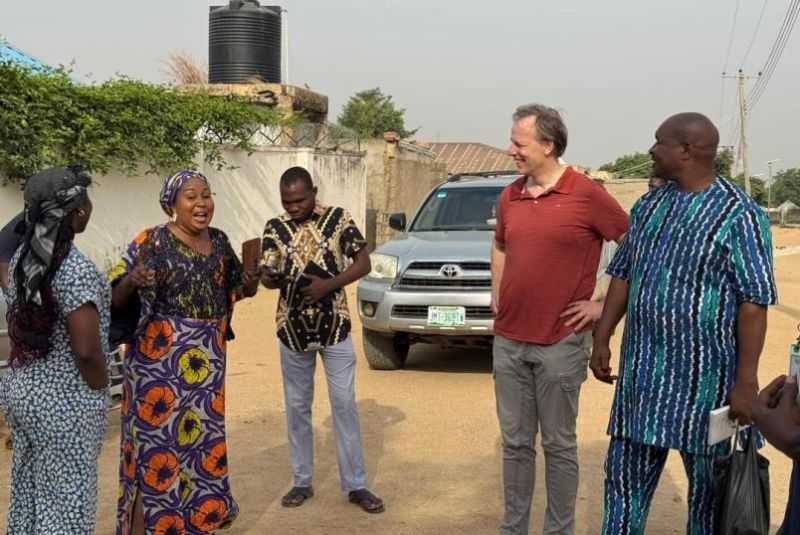
At the end of February, Prof. Dr. Dennis Dijkzeul – researcher from the Institute for International Law of Peace and Armed Conflict (IFHV) at Ruhr University Bochum and one of the principal investigators of the Network Humanitarian Research (NHF) – travelled to Nigeria and Cameroon for a five-week field-research project in areas that have suffered under the Boko Haram insurgency.
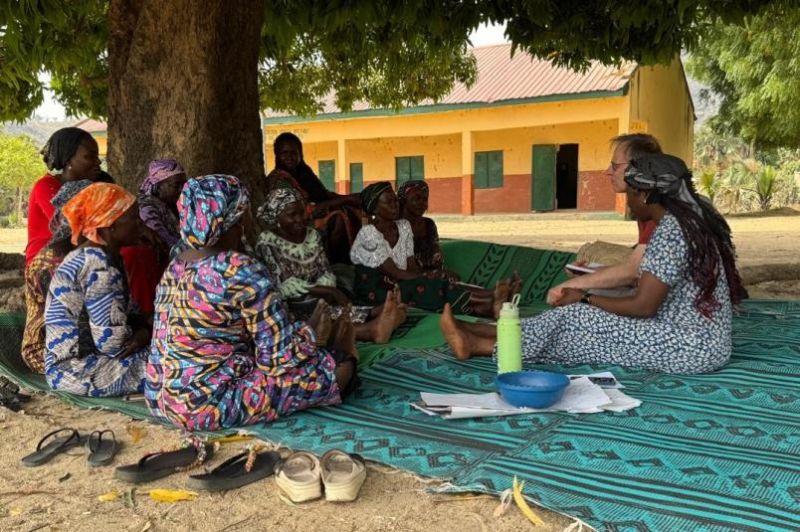
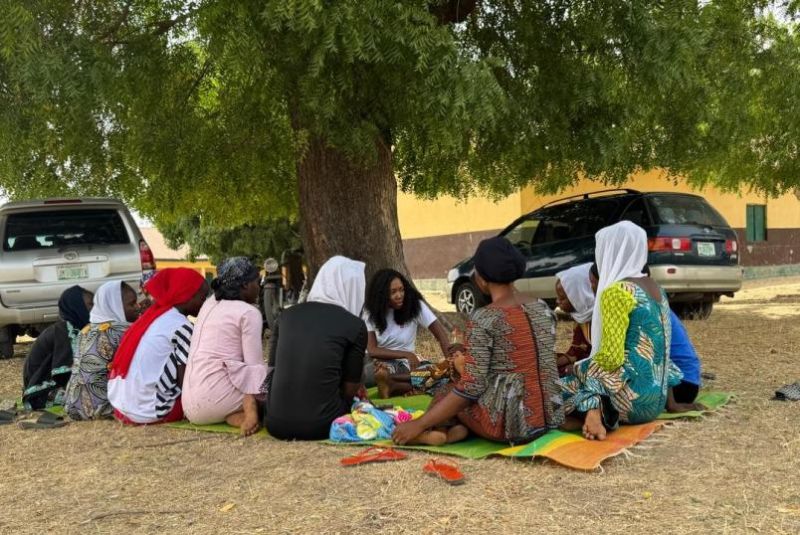
Dijkzeul investigated how a multi-sectoral transitional aid project of Caritas, which he helped to develop in 2022, has functioned on the ground. The project helps 51,000 people directly and 101,400 people indirectly across 25 villages (15 in Nigeria and 10 in Cameroon). It focuses on disaster risk reduction, food security, water supply, mental health, and social cohesion between Christian and Muslims – all in a region where conflict, climate change, population growth, and weak state structures reinforce each other’s negative effects. Against this backdrop, Caritas wanted to discover how to support not only the immediate needs of the affected people but also strengthen their resilience and rebuild their communities.
The project is particularly effective in the food security area: training farmers and setting up farmers’ associations, working with agricultural extension services and public officials, and promoting “Tom Brown” – a nutrient-rich blend of millet, corn, and soybeans that can be made locally and cheaply. In addition, this project is bearing fruit in other areas such as water supply and mental health and psychosocial support (MHPSS).
Key takeaways:
- Local participation is pivotal. It matters that local people can develop their own initiatives, take responsibility for maintaining infrastructure, and strengthen social cohesion. Cooperation between project officials, traditional leaders, and public authorities drives mutual learning and enables cost-effective ways to sustain these activities once the project ends.
- Local partners make a crucial difference. Caritas Germany’s long-term partnerships with local organisations – The Justice, Development and Peace Initiative in Nigeria, ALDEPA, and Caritas Maroua Mokolo in Cameroon – are central. For example, ALDEPA, a women-led organisation, is especially committed to women and girls, while strengthening dialogue between ethnic and religious groups.
- A multi-sectoral approach is crucial, as the work in one sector reinforces work in other sectors. For example, access to safe water helps to reduce conflict among herders and farmers, reduces morbidity and mortality, and improves agriculture.
- Sustainable change takes time – transitional aid funding needs to run over long periods of time (5 to 10 years).
The bigger picture: sustainable humanitarian action is not just about delivering resources. It is about building local capacity, strengthening social cohesion, and fostering long-term trust between international and local organisations.